

Needle & Syringe Programme Support
Pharmacies in Wolverhampton where you can access Needle Exchange
Boots UK 40-41 Dudley Street WV1 3NN 01902 427145
Ettingshall Pharmacy 3 New Street WV2 2LR 01902 490191
Heath Town Pharmacy 181 Wednesfield Road WV10 0EN 01902 456286
High Street Pharmacy 76 High Street Bilston WV14 0EP 01902 495225
Hingley Pharmacy 179 Lea Road WV3 0LG 01902 421132
Murrays Health Centre 128 Childs Avenue Coseley WV14 9XB 01902 883711
Pendeford Pharmacy Pendeford Healthcare Centre Whitburn Close WV9 5NJ
01902 781 844
Phoenix Centre Parkfield Road WV4 6ED 01902 621853
Recovery Near You Pitt Street WV3 0NF 0300 200 2400
Whitmore Reans Pharmacy Avion Centre 6 Bargate Drive WV6 0QW 01902 713123
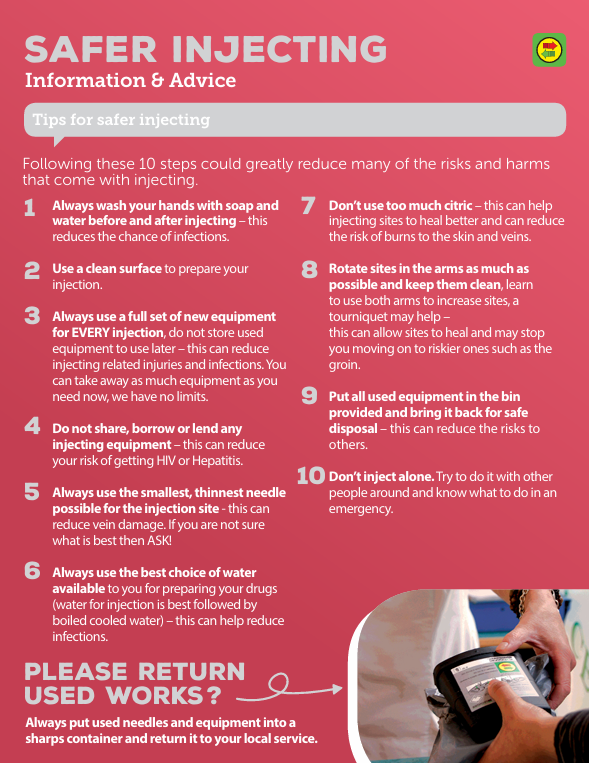
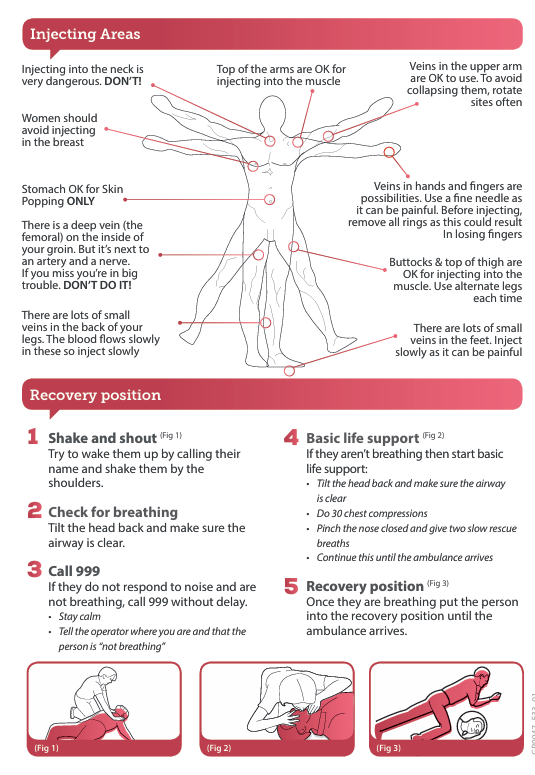
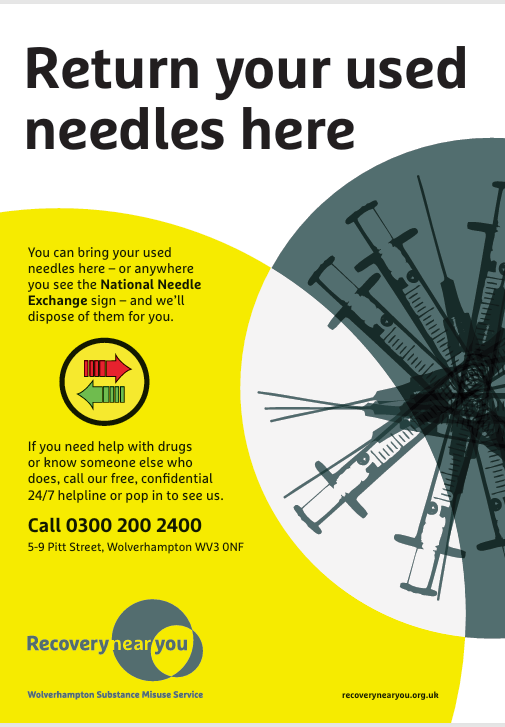
NHS pharmacies will provide new needles and other equipment to clients self-injecting
The pharmacy will offer a user-friendly non-judgemental and confidential advice to the client and deliver harm reduction messages and sign post into treatment if agreed with the client.
The client will choose items required from an approved list. Not sharing needles and other equipment reduces the risk of harm to the client. New supplies are sterile and should be used ONCE. Infection at the injection site and the transmission of blood born viruses are the risks of sharing or re-using injecting equipment.
The service is designed to be an “exchange” scheme so dirty equipment is returned to the pharmacy safely at the next time the client collects clean equipment. Discarded dirty equipment is a risk to everyone so clients are reminded of the exchange message.
During normal opening hours from selected community pharmacies.
No appointment although a discussion with the client will take a few minutes the first time they present so some basic information is collected which will be confidential within the pharmacy.
SUIT are committed, alongside Recovery Near You and Public Health to ensure that injecting drug users receive fair, supportive, non-judgemental and risk reducing treatment interventions within health services in Wolverhampton.
SUIT are a lived experience, peer-led recovery organisation and part of our delivery to the community advocates for service users both in treatment, but also towards those who may not be ready to engage with clinical treatment health interventions.
SUIT produce an annual Needle Exchange report, designed to feedback to Public Health and identify areas for improvement towards fair treatment of injecting drug users. If you would like any information about this process, please email jason.speckley@wvca.org.uk
If you are an injecting drug user in Wolverhampton, and would like to contribute to this valuable feedback, please fill out the form below. All answers are confidential.

Get in touch.
If you would like to offer feedback towards the Needle & Syringe Programme in Wolverhampton, please complete the form. Your feedback is valued and actioned.
Download 'Service User Perspectives on Safer Injecting Facilities' (Salisbury, P; Hill, D) Drug Science, Policy, & Law Journal, Vol 10, 2024 here



NALOXONE
Naloxone is an opiate antagonist that can be used to prevent overdose by heroin and other opioid substances, such as methadone, morphine and fentanyl. In an emergency, it can be delivered to the drug user via injection or nasal spray, and will prevent breathing problems that can cause overdose by opioids. Carrying naloxone is not government policy, but a local decision- making practice through drug treatment services, emergency, criminal justice, and public health roles. Although a prescription-only medicine, anyone can use it to save a life in an emergency, and it can be obtained from drug treatment clinics such as Recovery Near You.
Healthcare professionals working for the police can supply naloxone to police officers who may be responding to opiate users, and those working in prisons.
Naloxone does not intoxicate, and anyone can administer the drug in an emergency.
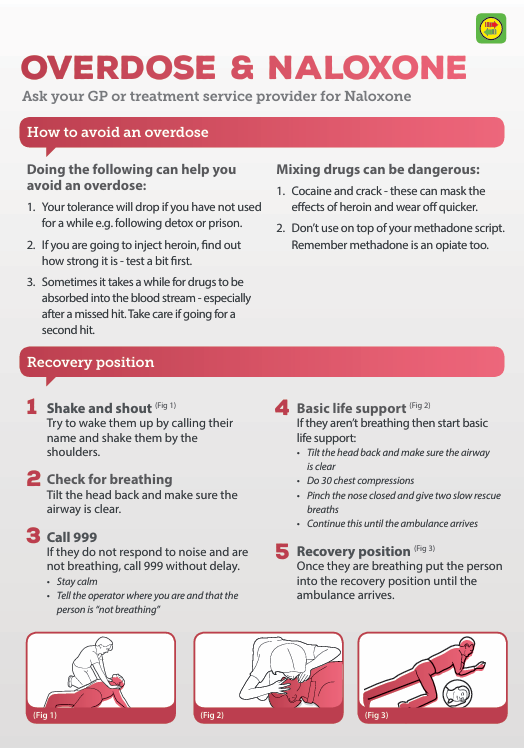
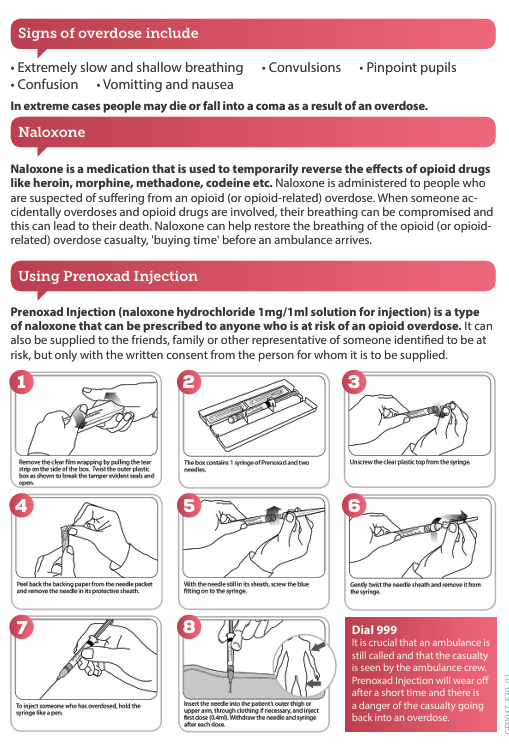
Download Overdose & Naloxone guidance here
Speak to your keyworker at Recovery Near You for Naloxone advice, distribution, and training
New Psychoactive Substances
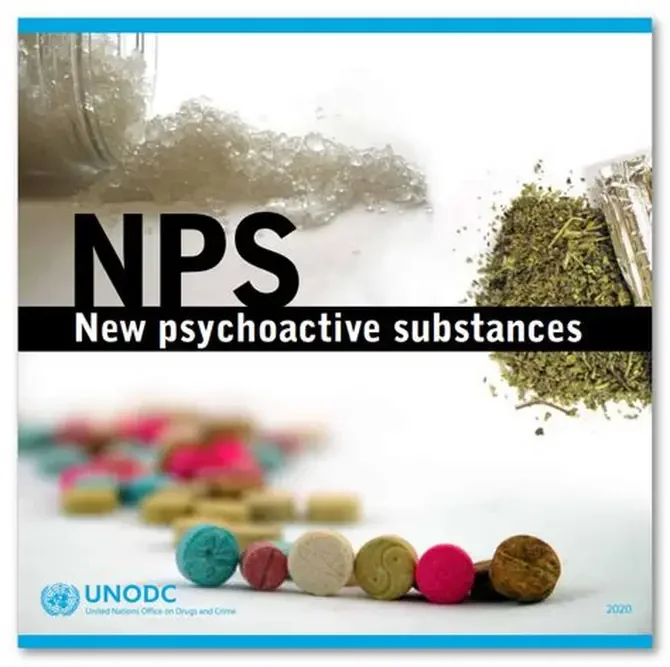
These are drugs that have mind altering properties (psychoactive). They previously were commonly known as legal highs (herbal highs) because some of them were legal to buy, and in the past were on occasions being sold by shops in the High Street, claiming that they were ‘bath salts’, not for human consumption. Typical examples include Mamba, Black Mamba, Spice, Space Cadet, and a multitude of other slang/brand names. They were often packaged in attractive foil packs with chemical compound names quoted on the back; these were rarely what was in the pack, and sometimes was just made up to look scientific.
The fact that they were legal did not mean that they were ever safe to take, and have always been highly variable in consistency and in effect, as well as in potentially harmful effects, including:
Sweats and shaking
Irregular heartbeat, variation of blood pressure
Increased or decreased appetite, weight loss
Anxiety and agitation, including acute behaviour disturbance
Paranoid feelings and beliefs, including presenting with acute paranoid psychosis
Dizziness and blurring of consciousness, but also can cause a lack of sleep
Stomach pains, vomiting
Kidney pain/damage, bladder damage, difficulty urinating
Coma
On occasions, death
(Source: Birmingham & Solihull Mental Health NHS Foundation Trust)

THE DROP (Bristol Drugs Project)
The Drop at Bristol Drugs Project has some great online resources providing information & support for people who use recreational drugs.
The more knowledge you have of the effects and risks of alcohol and other drugs, the better you will be able to make informed decisions about your own use.
Transform are a UK-based charity working nationally and internationally towards a just and effective system of legal regulation for all drugs. Transform’s mission is to regulate drugs that are currently illegal and make them safer, while taking the market away from organised crime.
Transform educate the public and policymakers on effective drug policy and develop and promote options for legal regulation. They support governments, policymakers and practitioners in achieving positive change that contributes to safer and healthier societies.

Transform UK Drug Policy Foundation

Transform’s Anyone’s Child campaign amplifies the voices of those who have been directly impacted by drug policy failures and want reform.


The Loop
The Loop publish drug alerts relating to substances that have been tested by The Loop and are considered to present a significant threat.
For example, some alerts relate to psychoactive substances mis-sold as other drugs, contaminants, or unusually high-strength drugs.
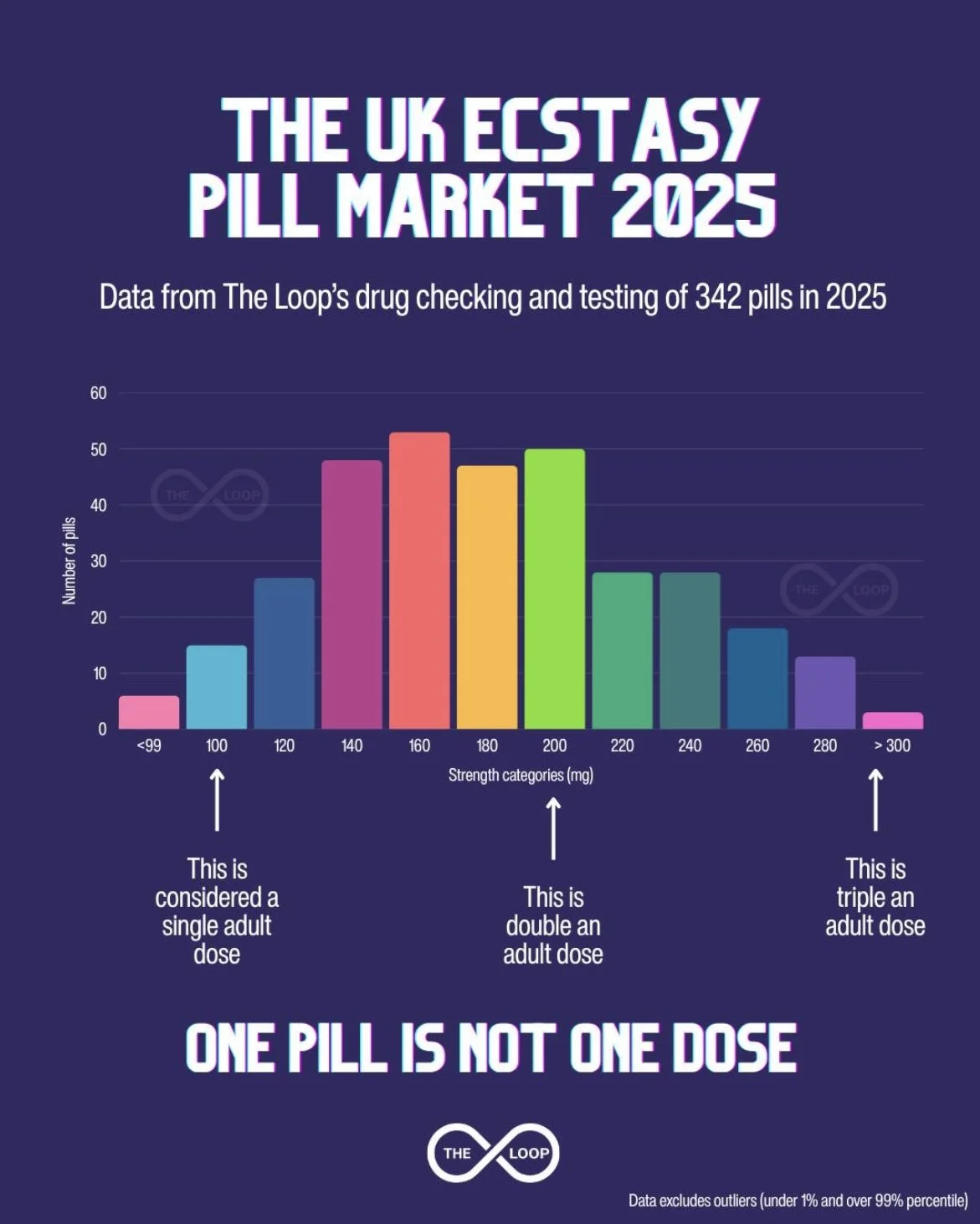
“The Loop aims to reduce drug-related harm through healthcare interventions, trainings and workshops informed by research and drug checking. The Loop are committed to ensuring harm reduction advice is available to the public in a variety of community settings, and that related information is communicated and disseminated widely to reduce drug related harm.
Evidence shows drug checking is effective in reducing drug-related harm and The Loop continues to expand this evidence base, alongside partner agencies and with similar services developing internationally.
The Loop’s mission and vision include a commitment to developing a nationwide network of drug checking services that is non-judgemental, accessible and available to all. This requires us to consider equality of access, and through doing so, recognise the challenges and barriers which may exist for individuals and communities. The Loop are then able to consider responses and deliver solutions. “

Let’s Talk About Chemsex
The Let’s Talk About Chemsex project, led by artist Harold Offeh and commissioned by Portraits of Recovery, was an ambitious year-long exploration into the intersections of sex, intimacy, and consent within queer communities. Drawing inspiration from Salt-N-Pepa’s groundbreaking singles “Let’s Talk About Sex” and “Let’s Talk About AIDS,” the project unpacked the often-silent experiences surrounding chemsex. Through workshops, performances, music, and discussion, Let’s Talk About Chemsex destigmatised topics traditionally surrounded by guilt, shame, or prejudice.
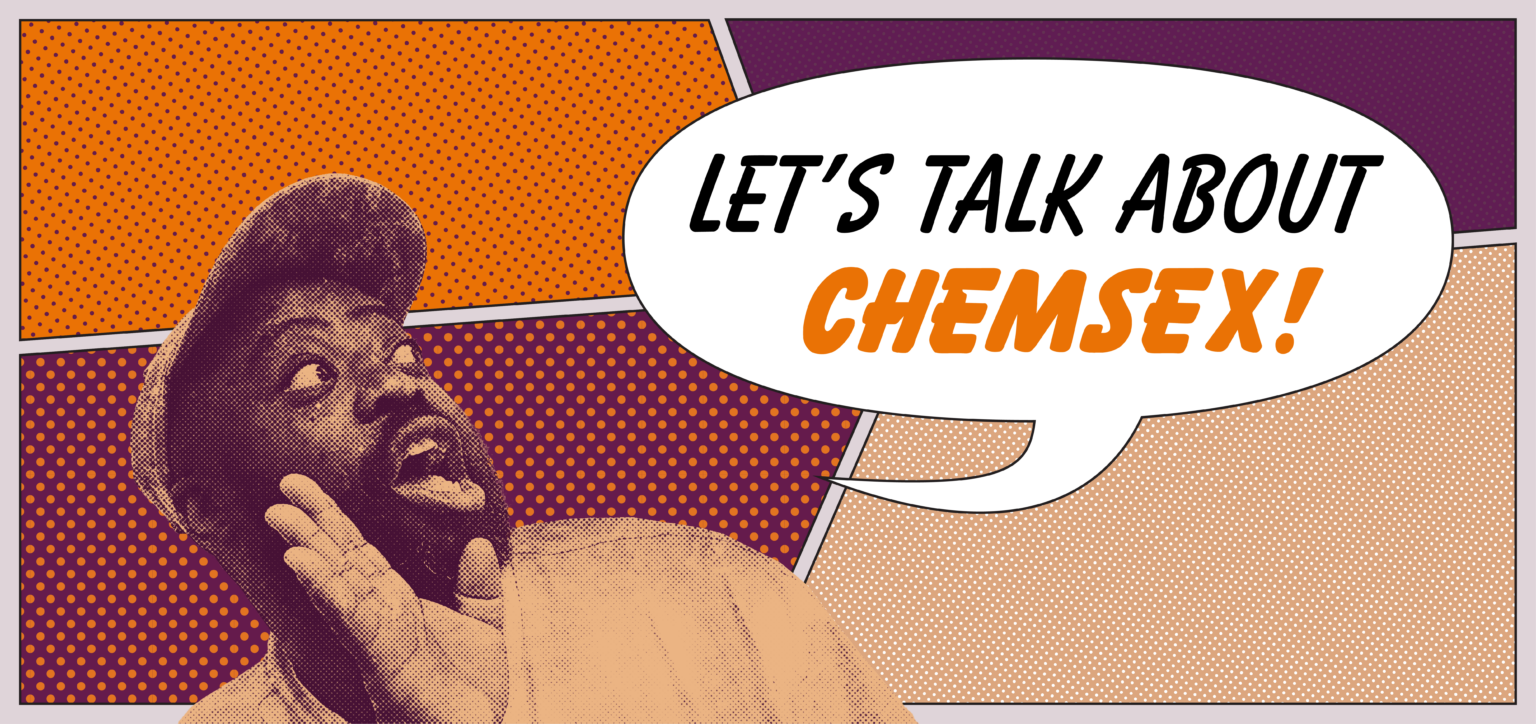
Image: Harold Offeh, courtesy of Jak.Skot
What is Chemsex?
Chemsex refers to the use of specific drugs (such as methamphetamine, GHB, and mephedrone) in the context of sexual activity, typically within the LGBTQ+ community, although it can occur in other groups as well.
The drugs are often used to enhance sexual experiences and increase libido.

Wolverhampton LGBT+ offer support, advice, groups, and counselling at Pride House, School Street, WV1 4LR.
Click here to get in touch with the team
The Terrence Higgins Trust has a dedicated resources page for all things Chemsex, including safety, making changes, and ownership & control.
Click here for guidance, info, and non-judgemental support.
You can access support and self-refer to Embrace Sexual Health Service here